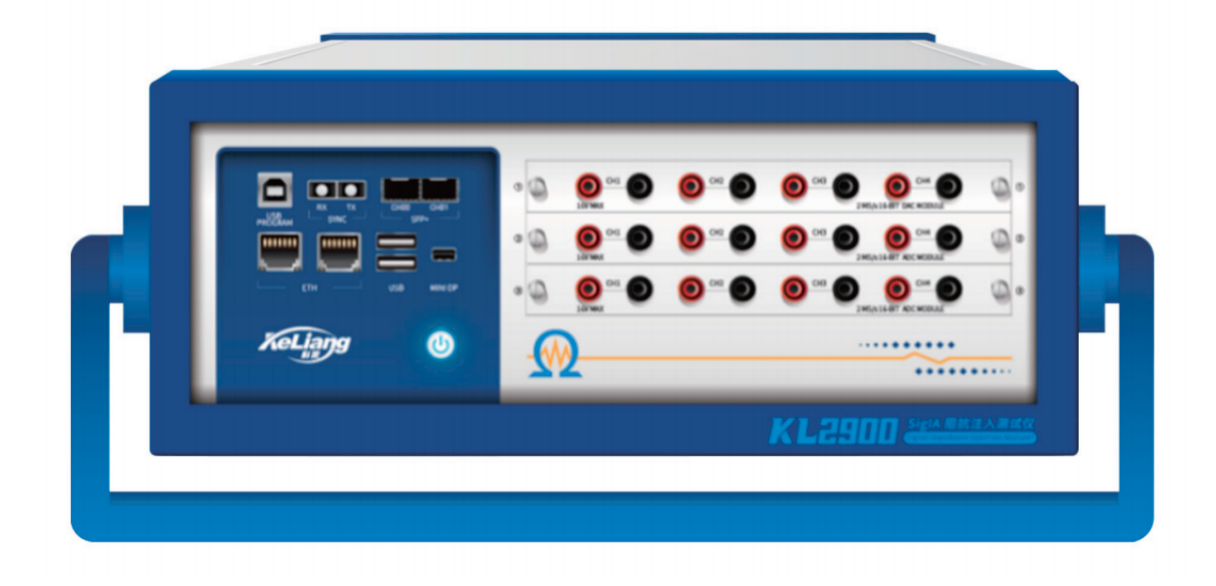
• Analog Input Channels: 4 channels/card; 2 cards per unit (8 channels total).
• Analog Output Channels: 4 channels/card; 1 card per unit (4 channels total).
• Sampling Rate per Channel: Up to 2 MS/s.
• Input/Output Signal Range: ±10 VDC.
• Analog Input Type: Differential voltage.
• Analog Output Type: Single-ended voltage.
• Sampling Resistor: ≥10 kΩ.
• Output Accuracy per Channel: ≤0.1% FS + 0.02% RD.
• Data Storage: 4 TB SSD.
• Ethernet Interfaces: 2 Gigabit Ethernet ports.
• Display Interface: 1 mini DisplayPort.
• USB Interfaces: 2 ports.
• Multi-unit Synchronization Port: 1 port.
• SFP Fiber Optic Interfaces: 2 ports.
• Unit Weight: 10 kg.
• Unit Dimensions: 360 mm × 253 mm × 148 mm (W × H × D).
QuiKIS Impedance Scanning and Stability Analysis Software
The QuiKIS Impedance Scanning and Stability Analysis software facilitates automated impedance scanning for power electronic converters and enables impedance-based stability analysis at the port level for the IBR-dominated power system. It offers a comprehensive suite of user-friendly features, including graphical editing, general analysis, scripting, impedance scanning, impedance identification, and impedance analysis. The software interface is available in either Simplified Chinese or English.
Disturbance Injection Settings
Once the QuiKIS software is connected to the KL2900 Impedance Injection Tester, users can configure all relevant test parameters, including disturbance signal settings, impedance selection, injection frequencies, data recording, and file download management.
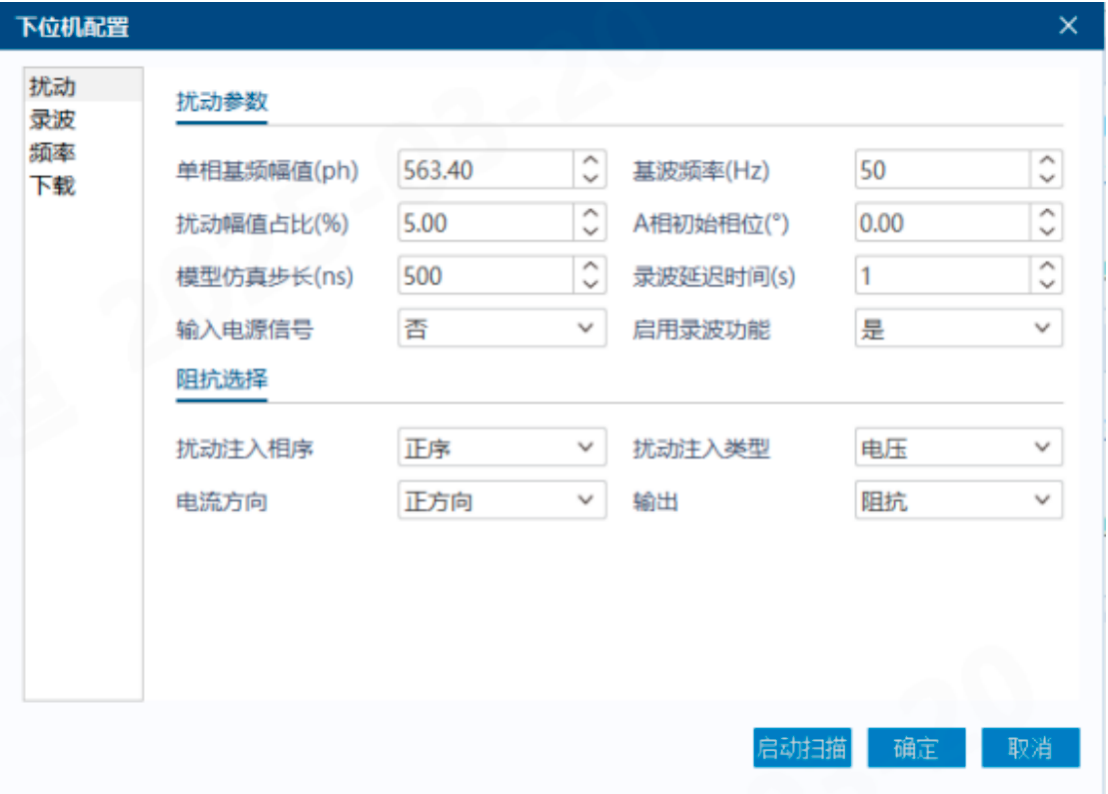
QuiKIS 下位机配置界面: QuiKIS Lower-Computer Configuration Interface
Impedance/Admittance Graphical Presentation
During an impedance scan, the results calculated in real-time by the tester are presented graphically within the QuiKIS software. Available plot types include Magnitude and Phase Bode plots, Real and Imaginary Part vs. Frequency plots, and Nyquist plots.
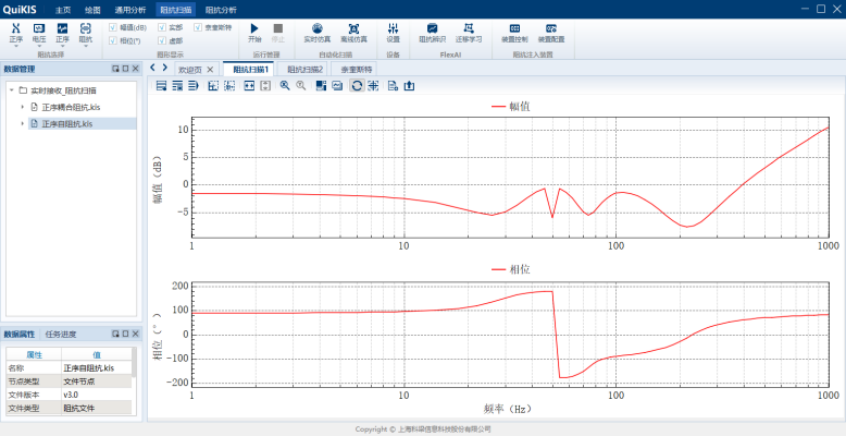
QuiKIS Magnitude and Phase Bode Plot
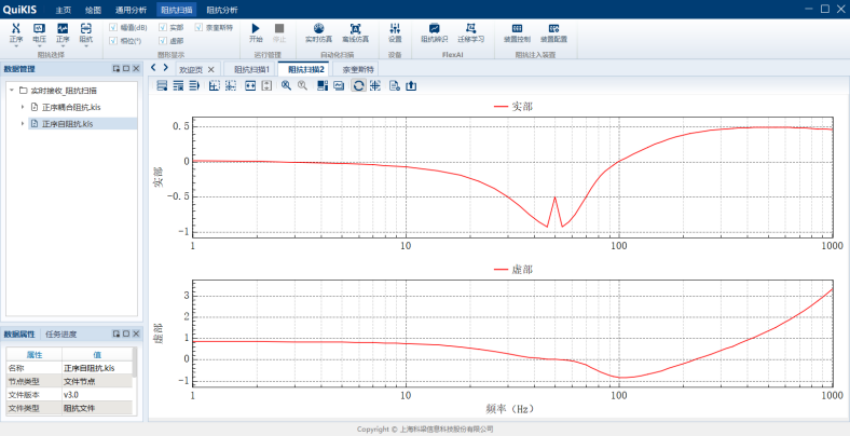
QuiKIS Real and Imaginary Part vs. Frequency Plot
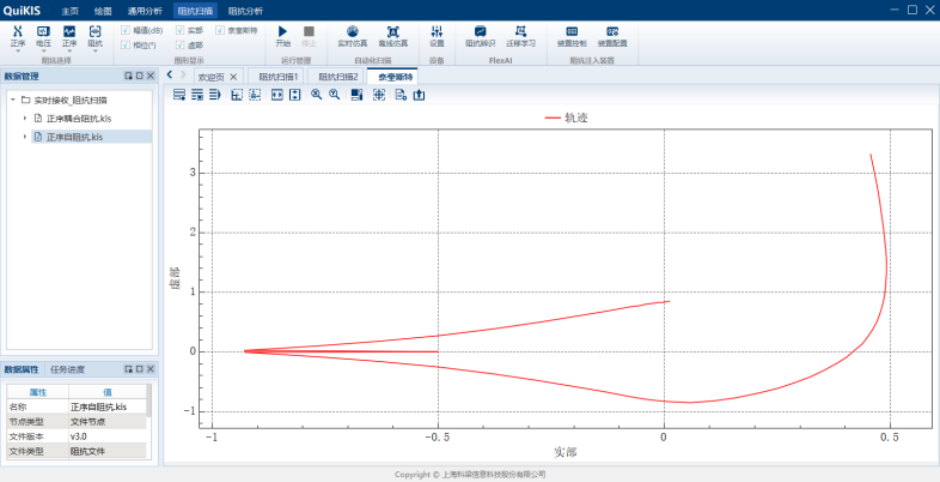
QuiKIS Nyquist Plot
Impedance/Admittance Data Verification
This feature verifies the accuracy of test data by calculating its deviation from a set of benchmark impedance/admittance data. Users can select up to two datasets for simultaneous comparison against the benchmark. The verification results display the maximum magnitude and phase differences. The software also plots separate Bode diagrams for the benchmark data, the comparison data, and the difference data.
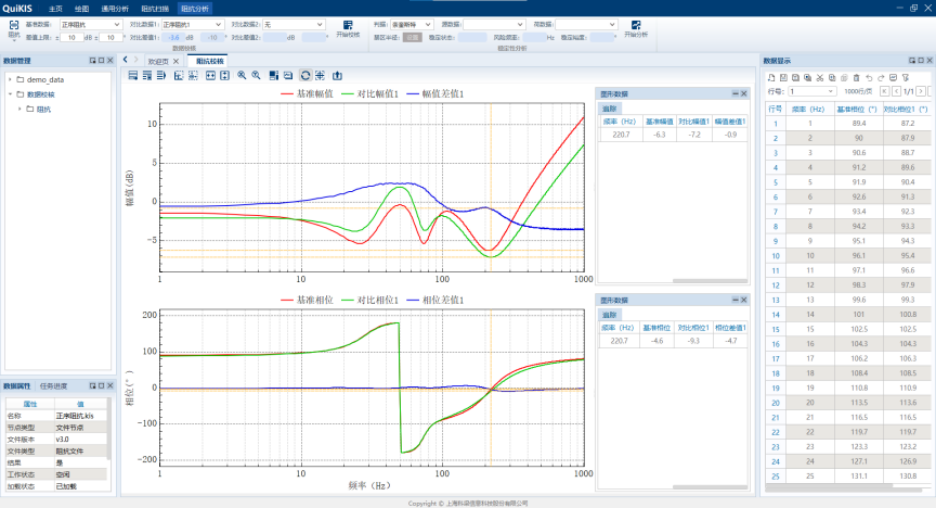
Impedance/Admittance Data Verification
Stability Analysis
The QuiKIS software performs both qualitative and quantitative stability analysis on source and load impedance data using either the Nyquist criterion or the Maximum Peak Criterion. Quantitative analysis includes calculations for stability margin and risk frequency. The Maximum Peak Criterion allows users to define forbidden region radii for specific frequency bands and generates the Nyquist plot for the source-to-load impedance ratio.
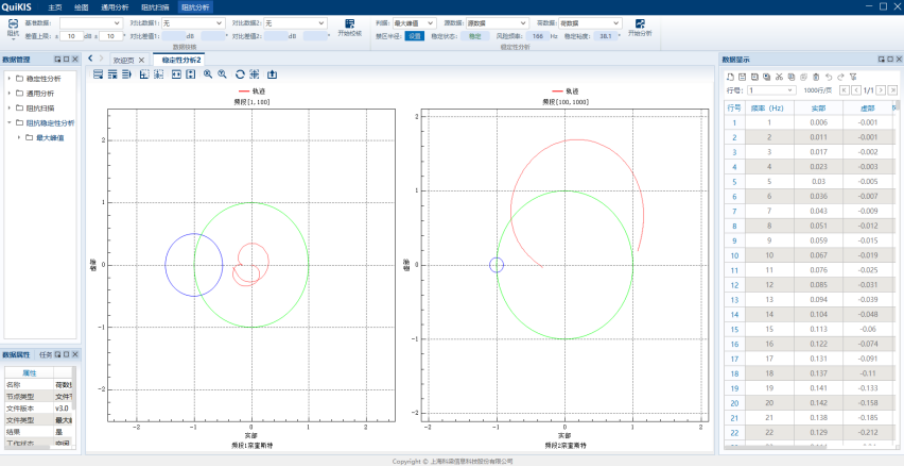
Maximum Peak Criterion